2026
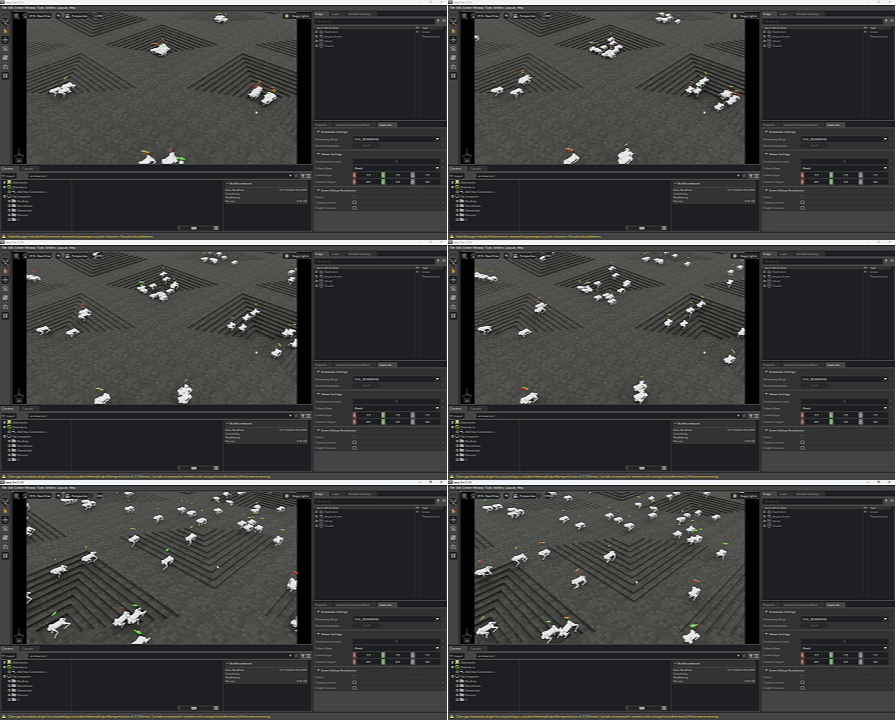
Robust RL Locomotion for Unitree Go2: Terrain Adaptation & Stair Climbing
Extended prior locomotion work by developing a robust reinforcement learning controller capable of handling complex terrains, including stair climbing, using NVIDIA Isaac Lab. Implemented domain randomization, terrain-aware observations, and refined reward structures to improve stability.
▶
Watch Results on YouTube
Diffusion policy training for manipulation tasks
Training a diffusion policy with ~50 episodes of data captured using Intel Realsense D405 camera in a UMI style data collection setup. The model has not learned it yet but the complete pipeline is ready from raw data to policy deployment. More data could solve the problem.
▶
Watch Results on YouTube
6DoF Object Pose Estimation with FoundationPose (NVIDIA)
Implemented NVIDIA's FoundationPose for model-based 6DoF pose estimation of CAD objects using an Intel RealSense D405 camera. Integrated the pose output with a PD velocity controller on a Ufactory robot arm to enable pose-driven manipulation — tracking object position and orientation in real time to guide end-effector control.
Synthetic vs Real vs Hybrid Datasets for CAD Object Detection (SyncMfg)
Conducted a systematic comparative study on dataset composition for manufacturing object detection. Generated fully synthetic training data in Blender (varied backgrounds and materials) and compared it against a 100% real image dataset and hybrid mixes at 2%, 5%, 10%, 15%, 25%, and 50% real data ratios. Key finding: a 5% hybrid dataset achieves optimal detection performance — minimizing annotation cost while retaining real-world robustness for CAD-model-based industrial object detection.
Visual Servoing with Ufactory Arm and AprilTag Tracking
Implemented image-based visual servoing on a Ufactory robot arm with an Intel RealSense D405 camera mounted on the end-effector. Used AprilTag detection as the visual feature source and a velocity controller to continuously minimize pose error between the detected tag and the target frame — enabling closed-loop, camera-guided manipulation without predefined trajectories.
2025
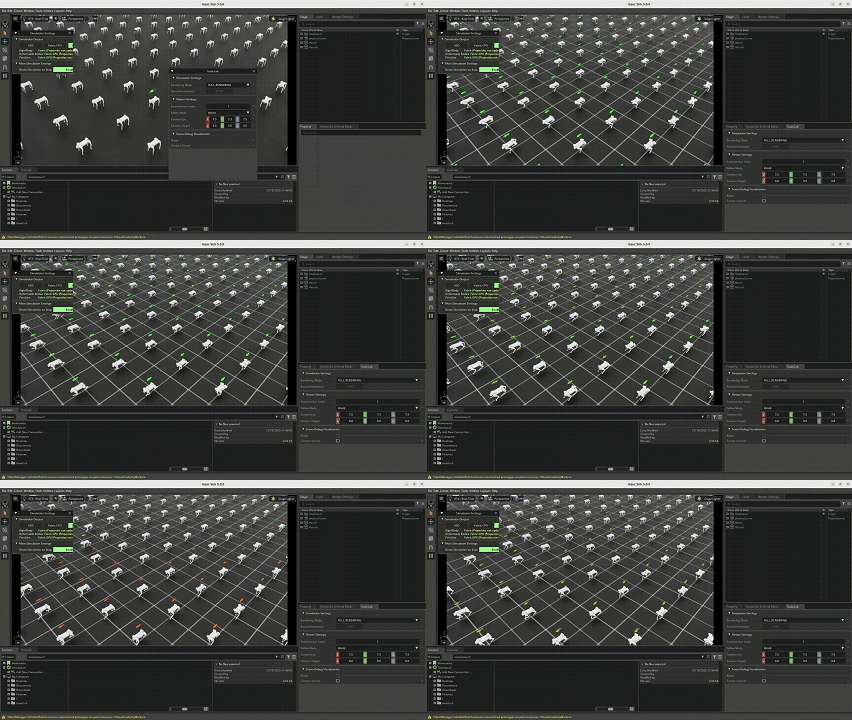
RL-Based Locomotion for Unitree Go2 (Isaac Lab)
Designed and implemented a custom reinforcement learning locomotion task for the Unitree Go2 from scratch using NVIDIA Isaac Lab. Built the full RL pipeline including task registration, observation/action spaces, reward design, and trained a stable walking policy using the RSL-RL framework with Direct Workflow environments for rapid iteration.
▶
Watch Results on YouTube
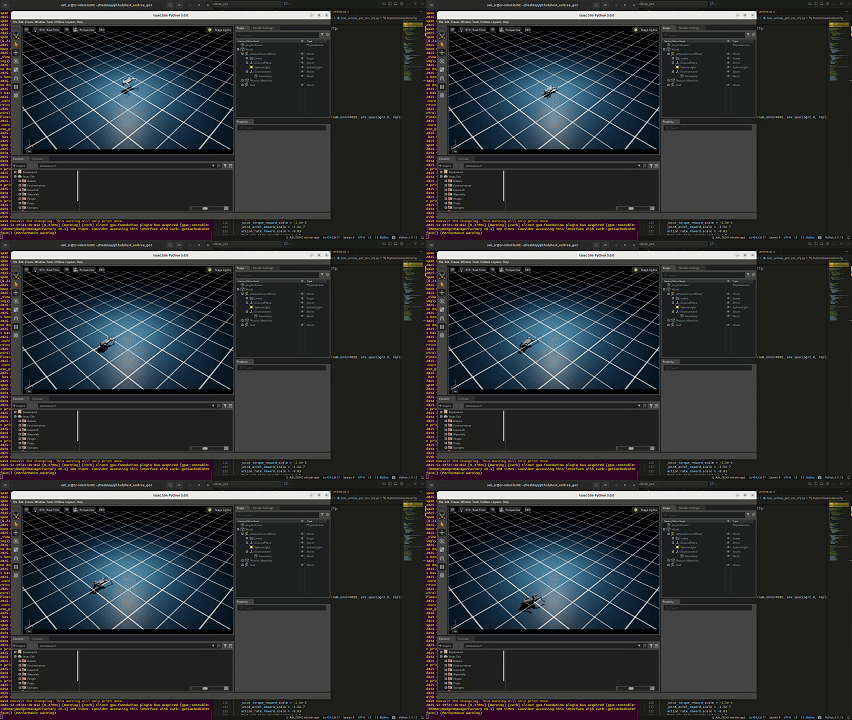
Sim-to-Sim RL Policy Transfer (Isaac Lab → Isaac Sim)
Deployed a locomotion policy trained in Isaac Lab into Isaac Sim to study policy execution, observation sequencing, and action-to-joint mapping. Reconstructed the environment, mapped the policy interface, and validated runtime behavior with interactive keyboard control as a precursor to sim-to-real deployment.
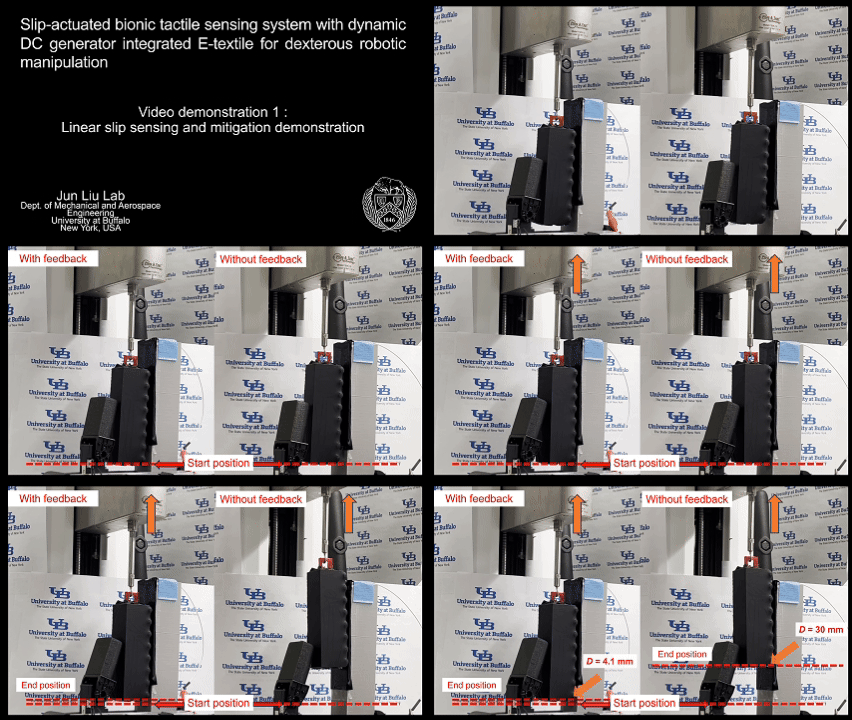
Linear Slip Mitigation in Robotic Manipulation
Co-authored a peer-reviewed Nature Communications study addressing linear slip during robotic grasping and manipulation. Contributed to algorithmic development and experimental validation demonstrating robust slip-aware control strategies under real-world contact uncertainties.
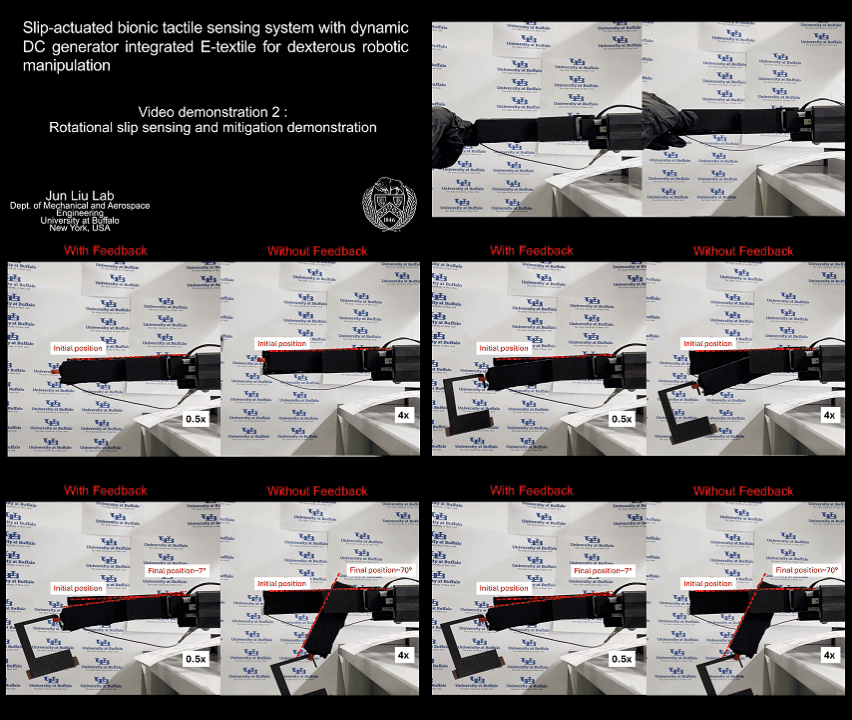
Rotational Slip Detection and Mitigation for Robot Arms
Investigated rotational slip phenomena in robotic manipulation and contributed to control strategies that detect and mitigate object rotation during grasping. Demonstrated improved manipulation stability through experimental evaluation on robotic arms.
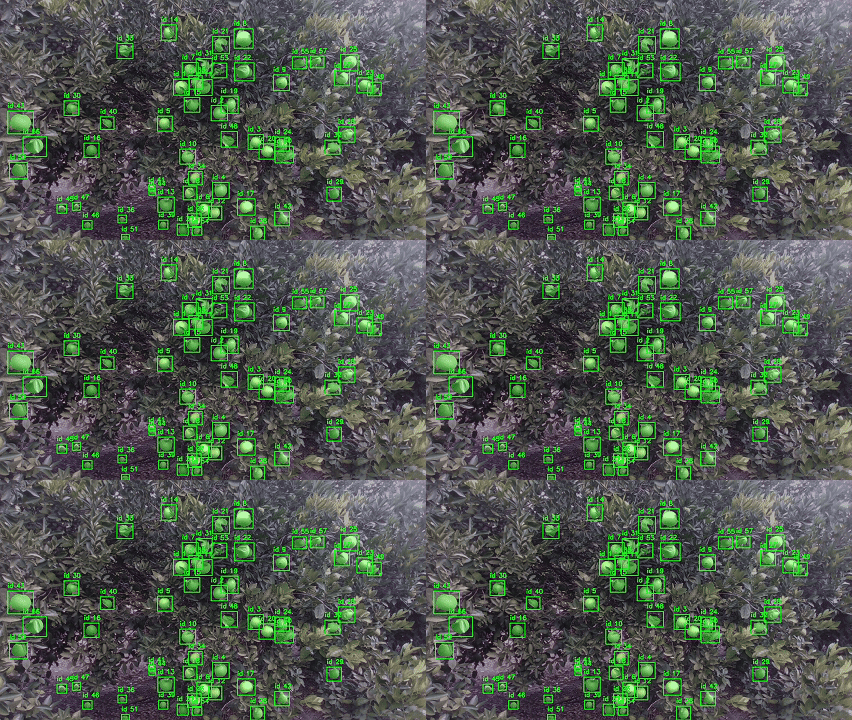
3D Citrus Fruit Detection and Size Estimation
Developed a multi-modal perception pipeline for agricultural robotics to detect, count, and estimate the size of citrus fruits using stereo vision. Combined custom-trained YOLO models with SAM-based segmentation and point cloud geometry for 3D localization, ripeness analysis, and GPS-tagged mapping.
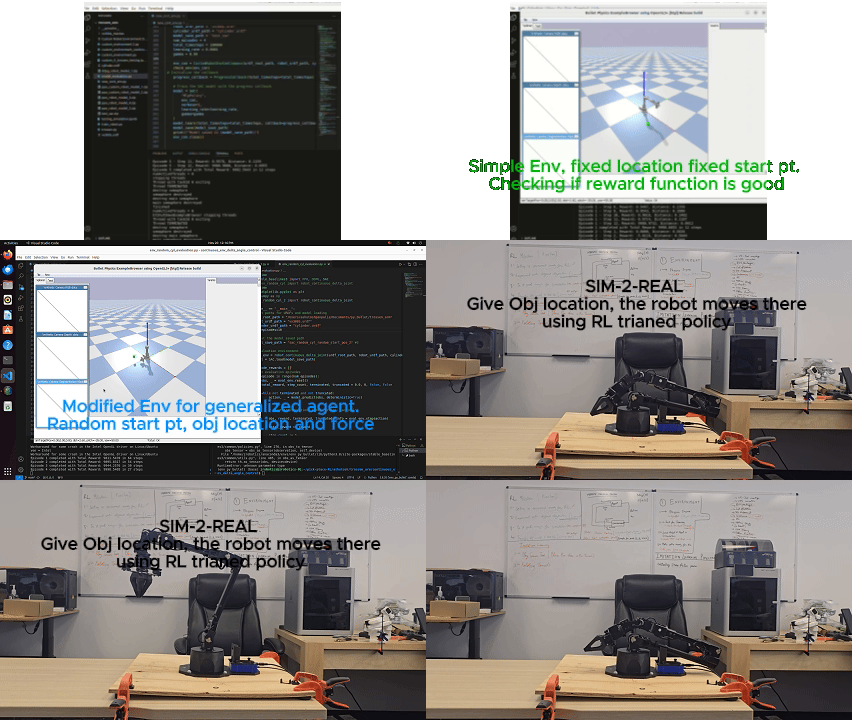
RL-Based Manipulator Control Without Analytical IK
Trained a reinforcement learning policy for a Trossen robotic arm in PyBullet to reach target positions without relying on analytical inverse kinematics. Progressed from PPO to SAC with randomized dynamics and external disturbances, and successfully deployed the learned policy in a sim-to-real setup.

Startup Judge — Startup Texas Pitch & SBIR/STTR Demo Day
Served as a startup judge for the Startup Texas Emerging Industries Pitch Competition and SBIR/STTR Demo Day in Brownsville, Texas. Evaluated early-stage deep-tech startups and participated in the allocation of approximately $100K in funding across multiple industry sectors as part of community outreach and innovation support.
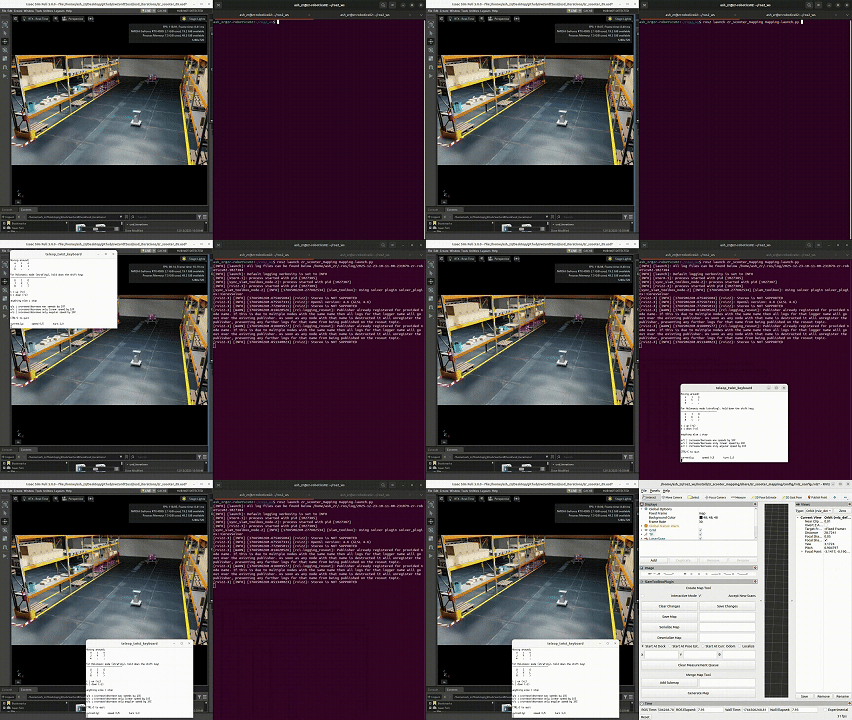
ROS 2 Navigation Stack Deployment in Isaac Sim
Integrated NVIDIA Isaac Sim with ROS 2 via the ROS 2 Bridge to deploy and test the ROS 2 navigation stack. Validated SLAM and autonomous navigation using slam_toolbox and Nav2, enabling map generation, localization, and goal-based navigation in a simulated robotics environment.
2024
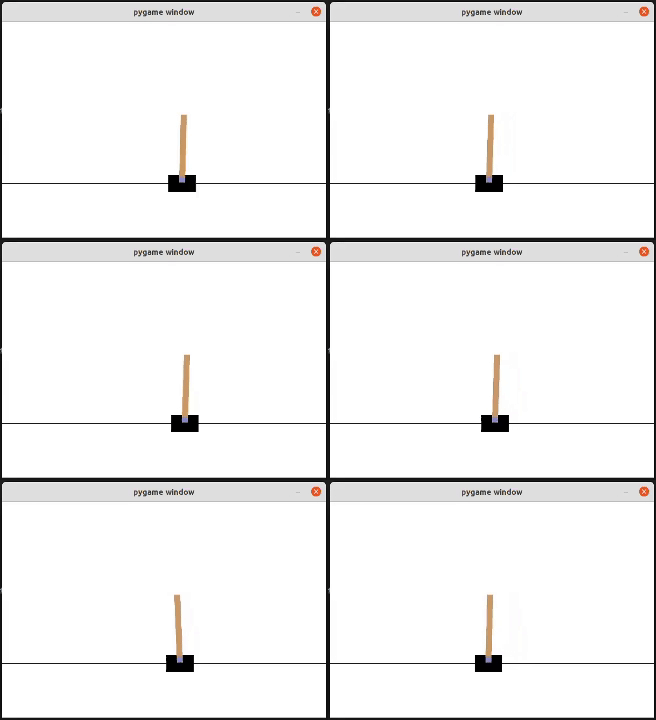
Deep Q-Learning for Classic Control (Inverted Pendulum)
Implemented DQN from scratch to solve the inverted pendulum task in OpenAI Gymnasium, including value network design and discrete action selection. Additional handwritten algorithms include A2C and tabular Q-learning to demonstrate foundational RL understanding.
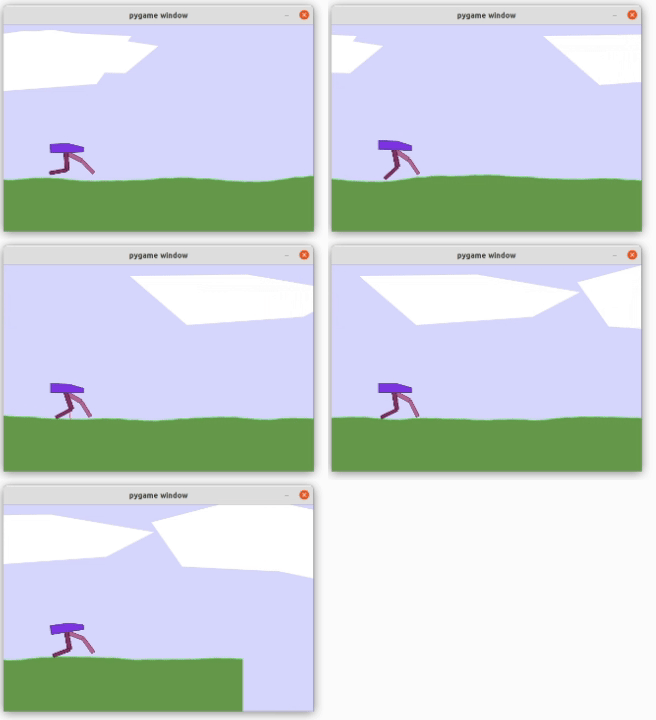
Continuous Control with DDPG for Bipedal Locomotion
Developed a continuous control RL solution using DDPG to train a bipedal walker environment, implementing actor-critic networks and stabilizing the learning process in simulation. Focused on observation-action mapping and reward shaping for locomotion efficiency.
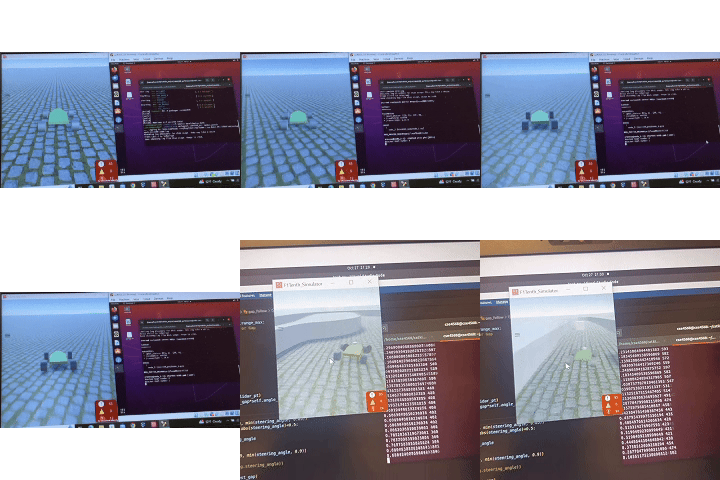
Autonomous Driving Control on F1TENTH Using PID & Gap Follow
Implemented a PID-based steering controller and lidar-based gap follow algorithm for obstacle avoidance, achieving robust trajectory tracking on the F1TENTH autonomous racing platform.
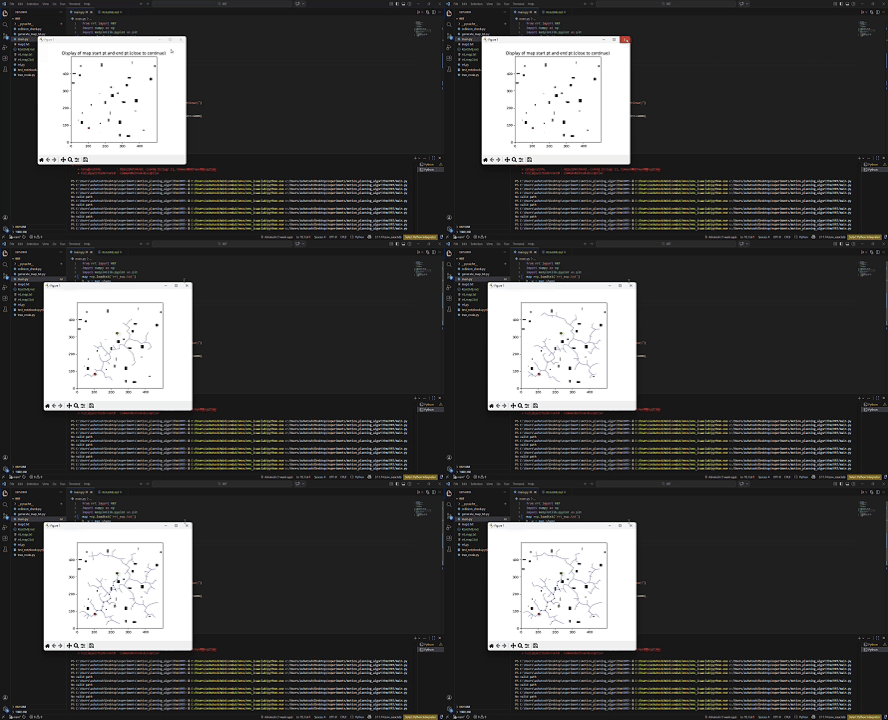
Dynamic Obstacle Avoidance Using RRT on F1TENTH
Integrated pure pursuit path tracking with RRT-based dynamic obstacle avoidance to navigate the F1TENTH platform safely. Demonstrated real-time replanning and robust trajectory adherence in complex race scenarios.
▶ Watch Results on YouTube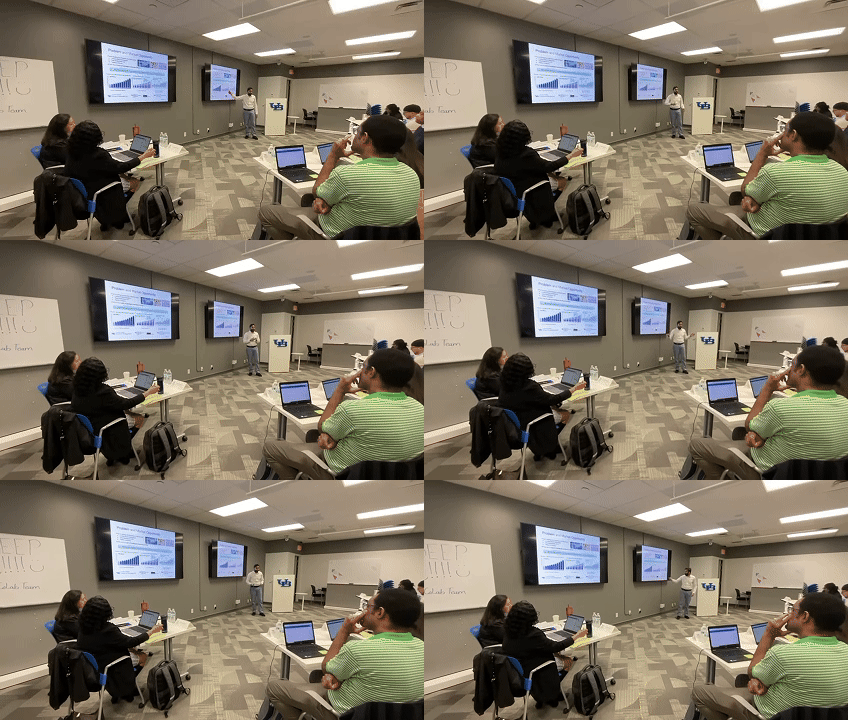
Startup Competition Participant — Panasci (UB)
Participated in the Panasci Startup Competition at the University at Buffalo, clearing two evaluation rounds. Presented technology ideas to a panel of judges, demonstrating early-stage innovation and entrepreneurial engagement.
2023 & Earlier
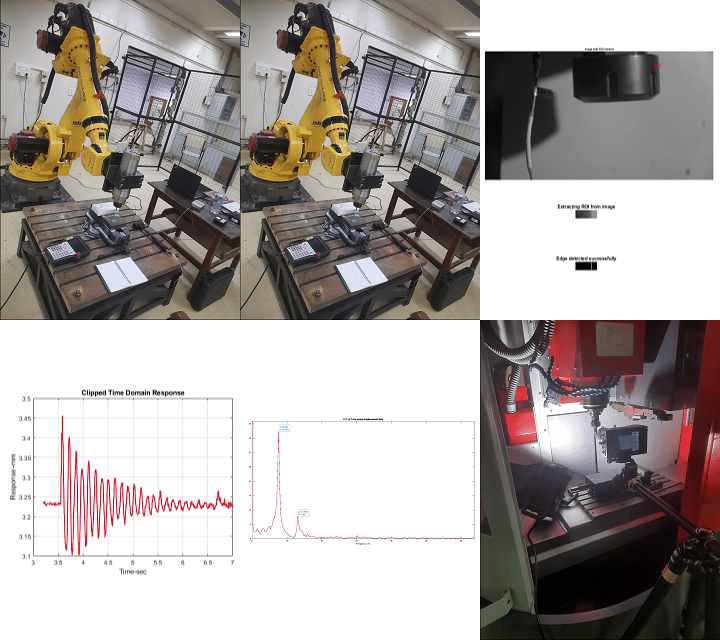
System Identification on FANUC Industrial Robot (IIT Kanpur)
Conducted a research internship at IIT Kanpur focused on system identification of a FANUC industrial robotic arm. Designed and executed vibration-based experiments, collected displacement-time data, and applied FFT-based modal analysis to identify dominant system dynamics and resonance characteristics.
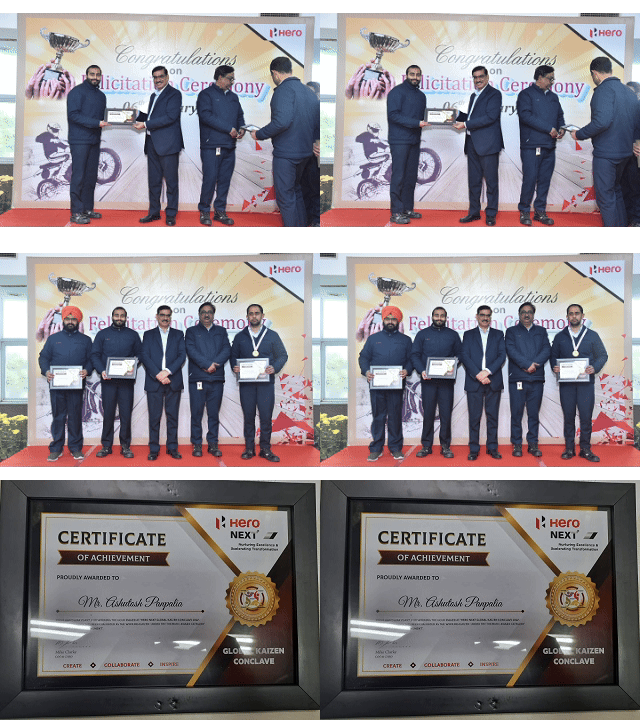
Manufacturing Quality Improvement Award — Hero MotoCorp
Received an award at Hero MotoCorp two-wheeler manufacturing facility for contributing to manufacturing quality improvement initiatives. Supported the introduction of automated inspection tools and process enhancements to improve defect detection and production consistency.
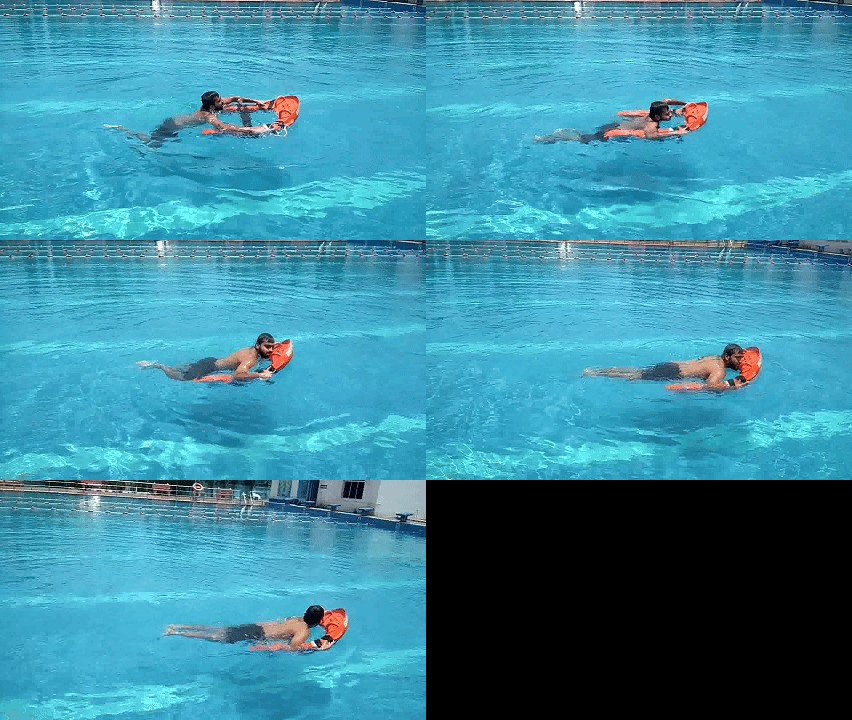
Water Rescue Drone for Drowning Rescue Assistance
Worked on the development and field testing of a water rescue drone designed to assist in drowning rescue scenarios. Developed an embedded system to capture and transmit impact force data during water interactions, enabling performance evaluation under real operating conditions.
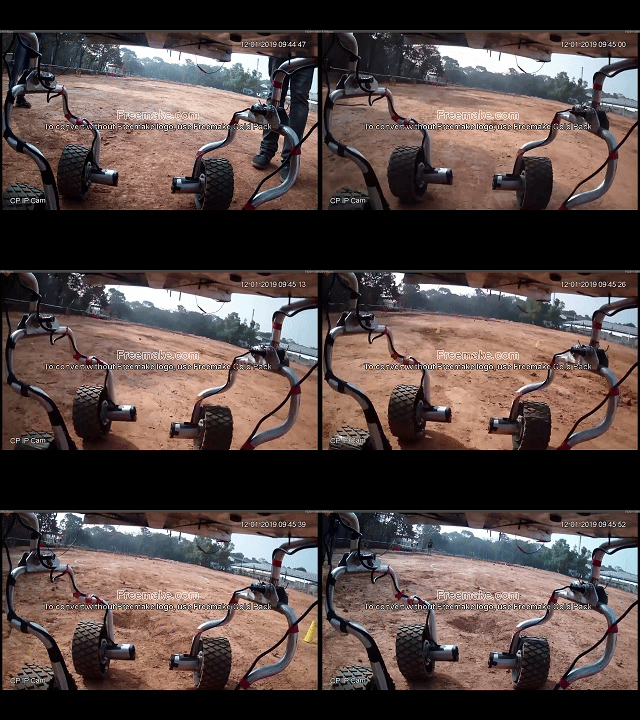
Modular Robotic Arm for Mars Rover (5-DOF)
Designed and built a 5-DOF modular robotic arm for a Mars rover prototype with a lifting capacity of 3 kg. Implemented inverse kinematics–based control with a closed-loop feedback system using multi-turn potentiometers for absolute joint position sensing.
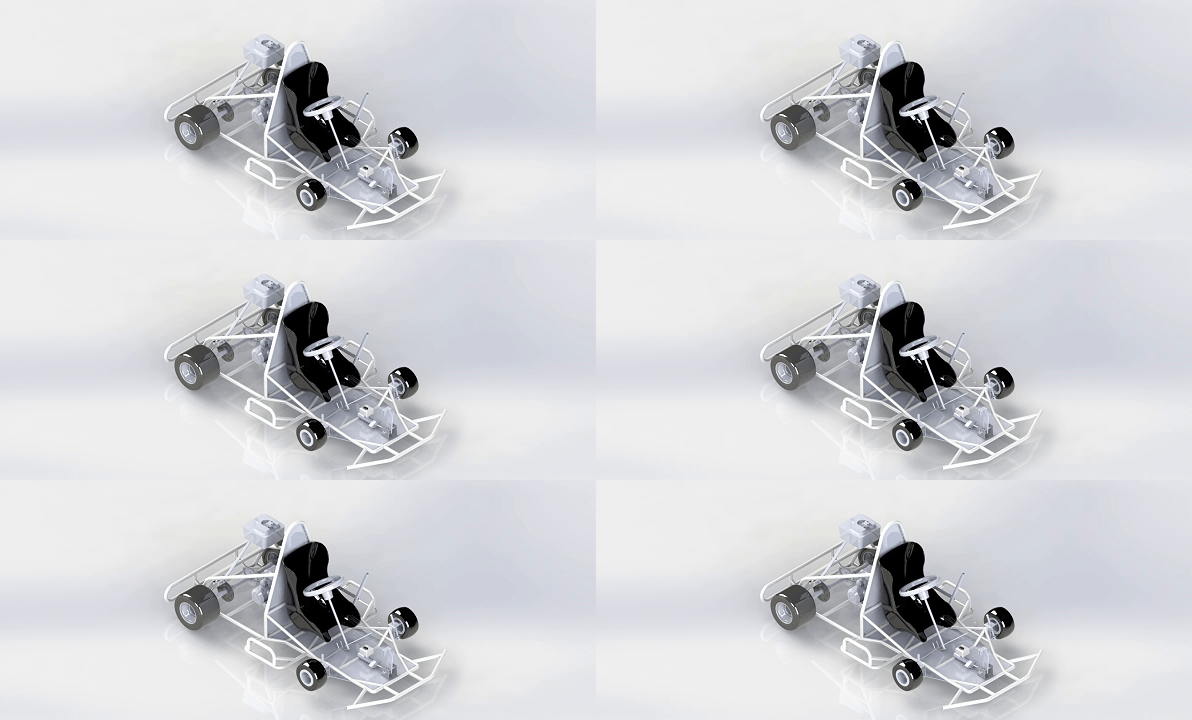
Go-Kart Design and Build Project
Designed and built a go-kart prototype with full compliance to competition regulations with a team of 20 engineering students. Optimized the steering geometry to achieve a minimum turning radius of 1.89 m and validated performance through real-world testing and competition evaluation.
▶
Watch Go-Kart in Action